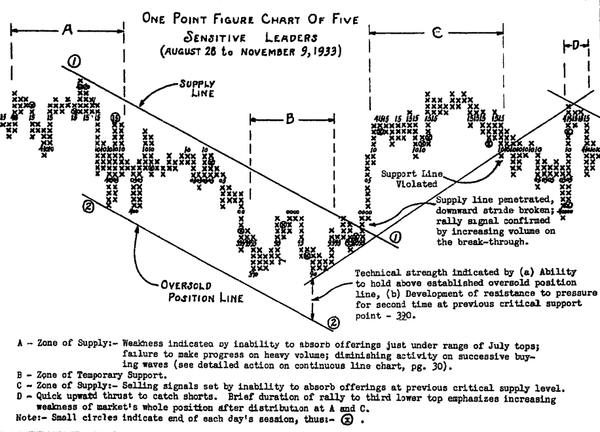
Foundations
Wyckoff's method rests on four axioms that cannot be bypassed without corrupting everything above them. What counts as valid evidence, what must be ignored, and why those rules are unconditional.
Wyckoff's method rests on four axioms that cannot be bypassed without corrupting everything above them. What counts as valid evidence, what must be ignored, and why those rules are unconditional.
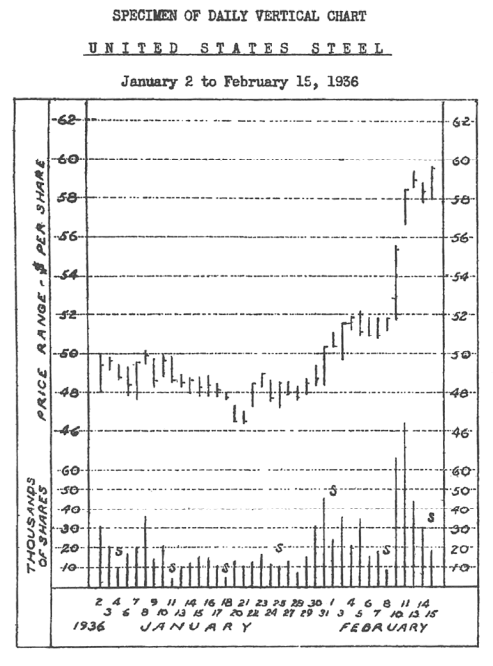
Supply, demand, and cause-and-effect are not concepts -- they are measurable forces visible in price and volume. How each law operates and why violating any one makes campaign reading impossible.
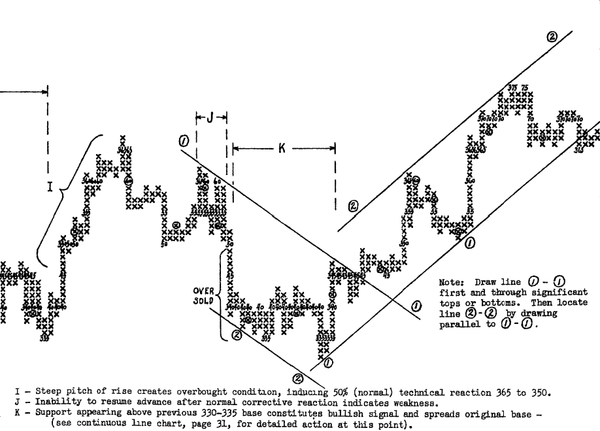
Before price or volume can be read, the market must be organized into units that carry meaning. The mental models -- Composite Operator, trend channels, market position -- that make the tape legible.
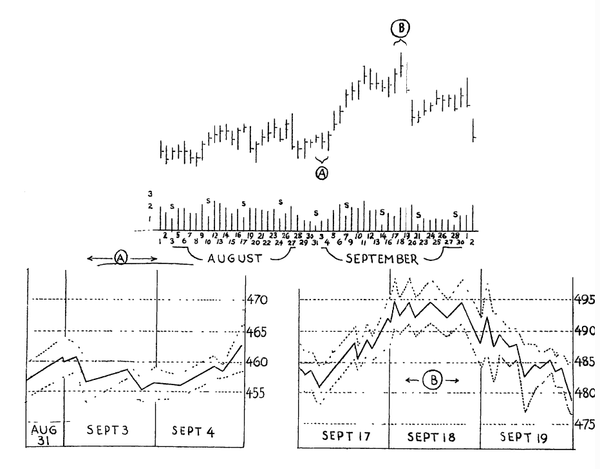
The Wave Chart and Four Basic Factors form the foundation of every analytical judgment. How the instruments of Wyckoff analysis are constructed, calibrated, and read for evidence of operator intent.
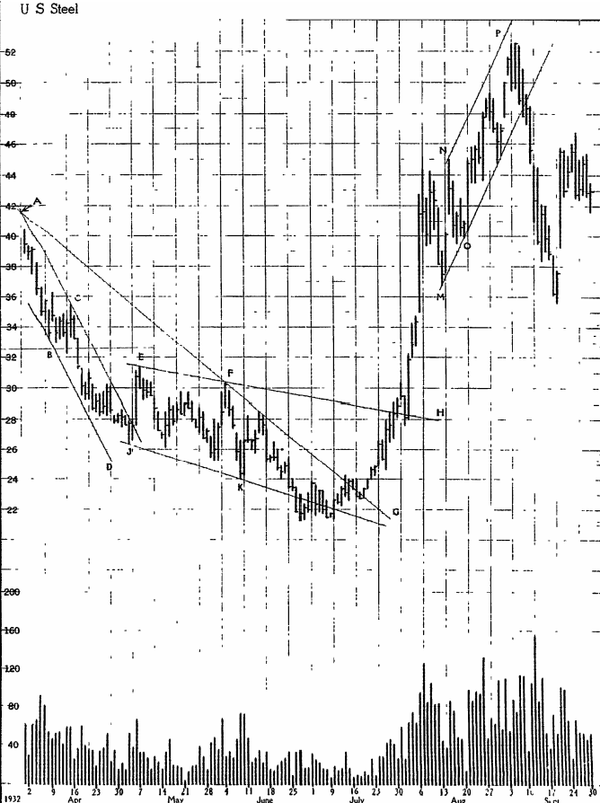
Trend channels define the geometry of a campaign. Stride lines, overbought and oversold positions, hinge formations, and how price geometry determines both entry timing and danger zones.
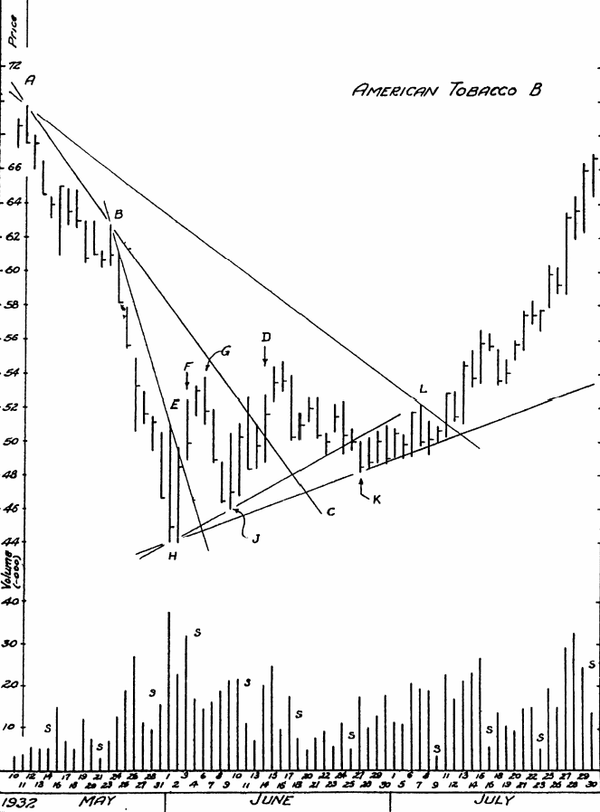
Volume is the only direct evidence of buying and selling force. Reading volume against price spread, identifying divergences that signal exhaustion, and the patterns that precede the most reliable moves.
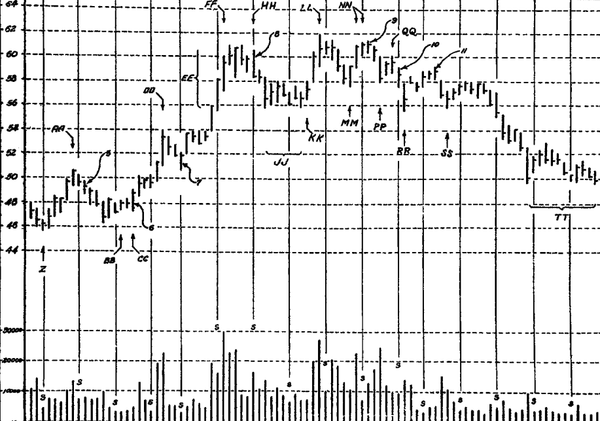
Technical position is the synthesis verdict -- where is this stock relative to its optimal entry moment? Scoring all analytical factors and identifying the Springboard setup that precedes a campaign.
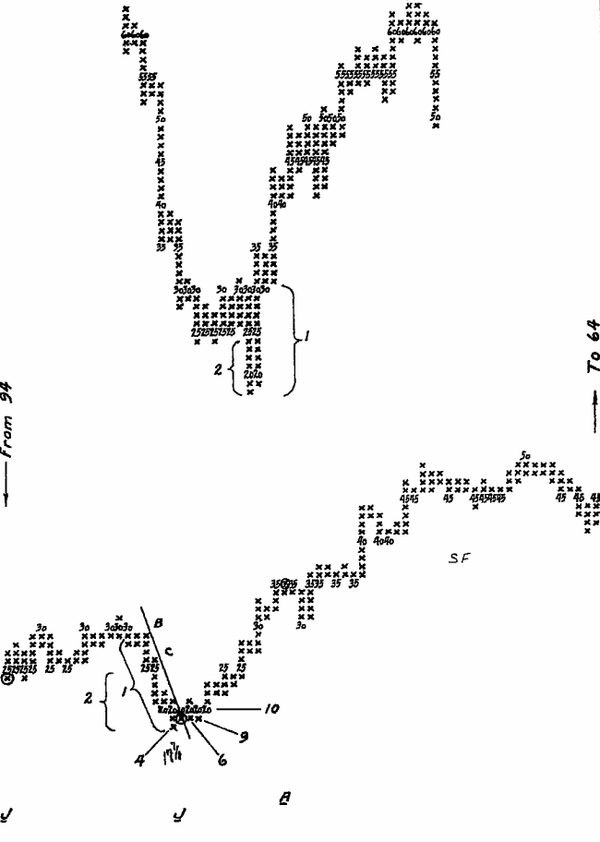
Figure charts measure the lateral cause that a campaign will ultimately express. Count mechanics, counting zones, projecting objectives, and assessing reward-to-risk before committing to a position.
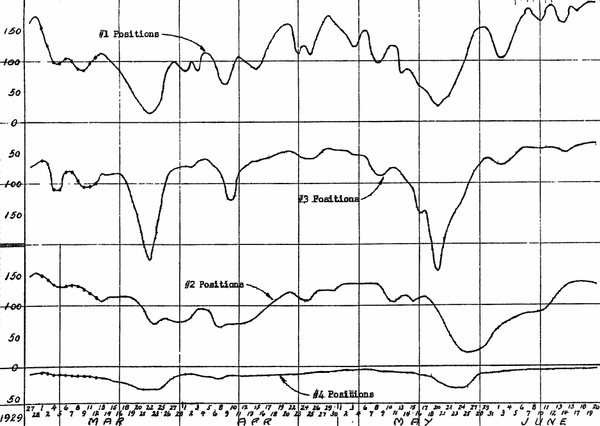
No stock trades in isolation. Comparing stocks to sector and market, how relative strength and weakness reveal operator activity, and the three-tier drill-down that determines which campaign deserves capital.
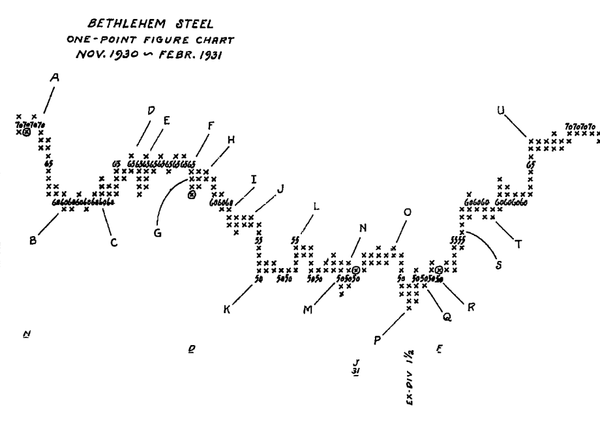
Where all prior analytical work converges into one question: is there a campaign, and is it enterable? Synthesizing trend, volume, position, and figure objectives into a structured go/no-go verdict.
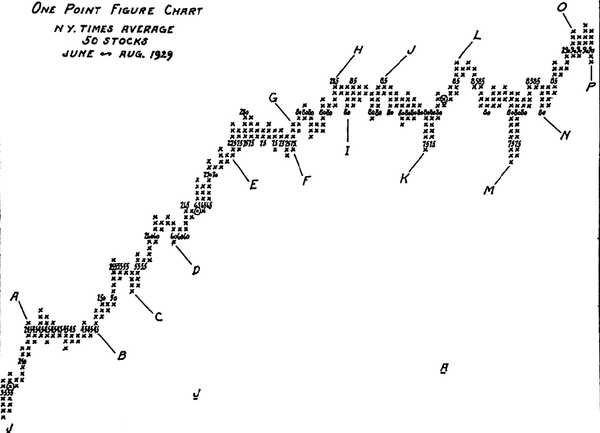
Accumulation, markup, and the transition to distribution each contain named events that recur across markets. Every bullish maneuver -- from Preliminary Support through Sign of Strength -- with the evidence that identifies each.
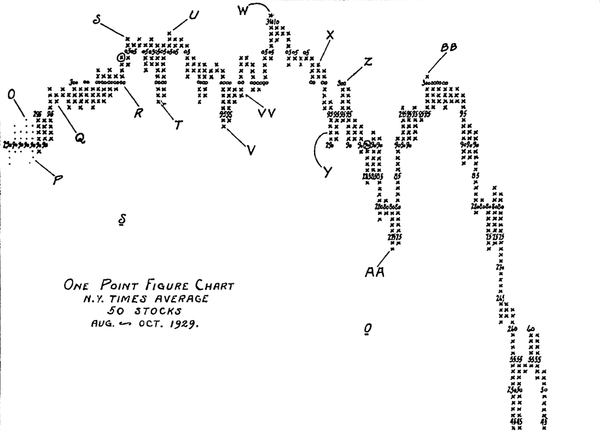
Distribution and decline produce mirror events to the bullish sequence, plus refinements that appear in both directions. Every bearish maneuver and the failure modes that arise when standard labels do not hold.
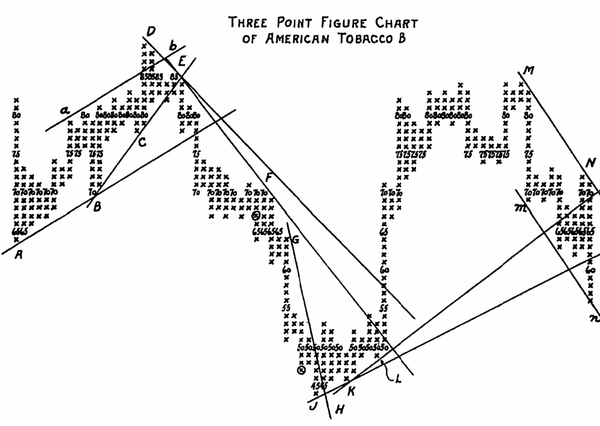
Phases A through E organize the named events of Level 6 into a campaign arc. What each phase accomplishes, how to identify transitions, and how phase location shapes entry, stop, and objective decisions.
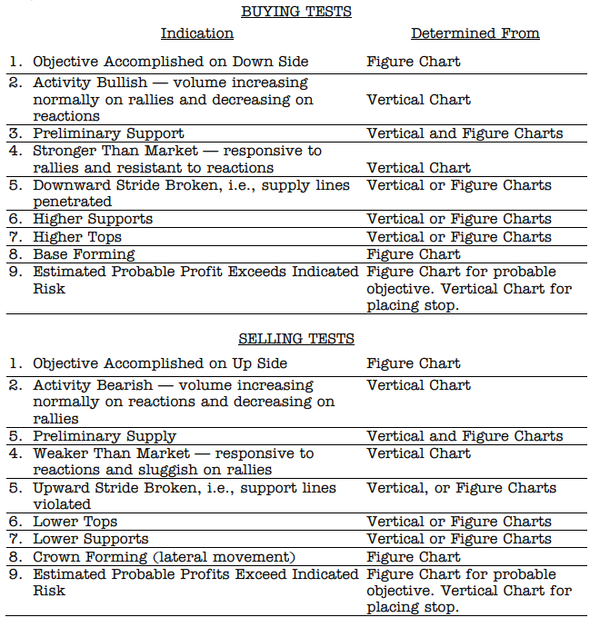
The Nine Tests are the final entry filter: a structured checklist that all prior analysis must pass before a position is taken. Each test, its evidence threshold, and how to quantify reward-to-risk before committing capital.
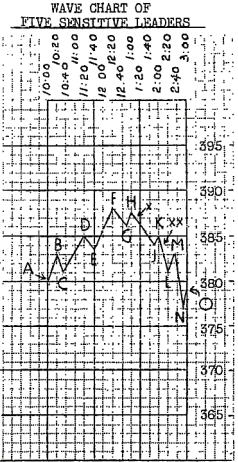
Stop placement is not defensive -- it is structural. How Wyckoff used stop orders to define risk precisely, when and how to move stops as a campaign develops, and how position size connects to the stop distance.
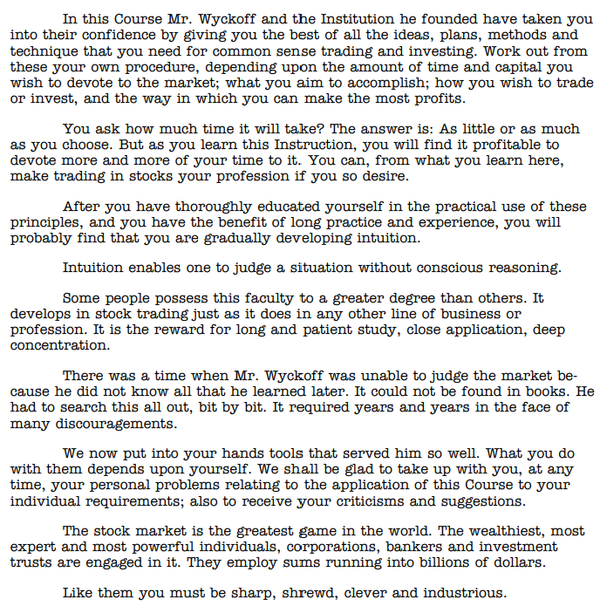
Technical skill is necessary but not sufficient. The mental operating system Wyckoff demands: the seventeen common errors, the discipline of operating alone, and why market reading is as much character as method.